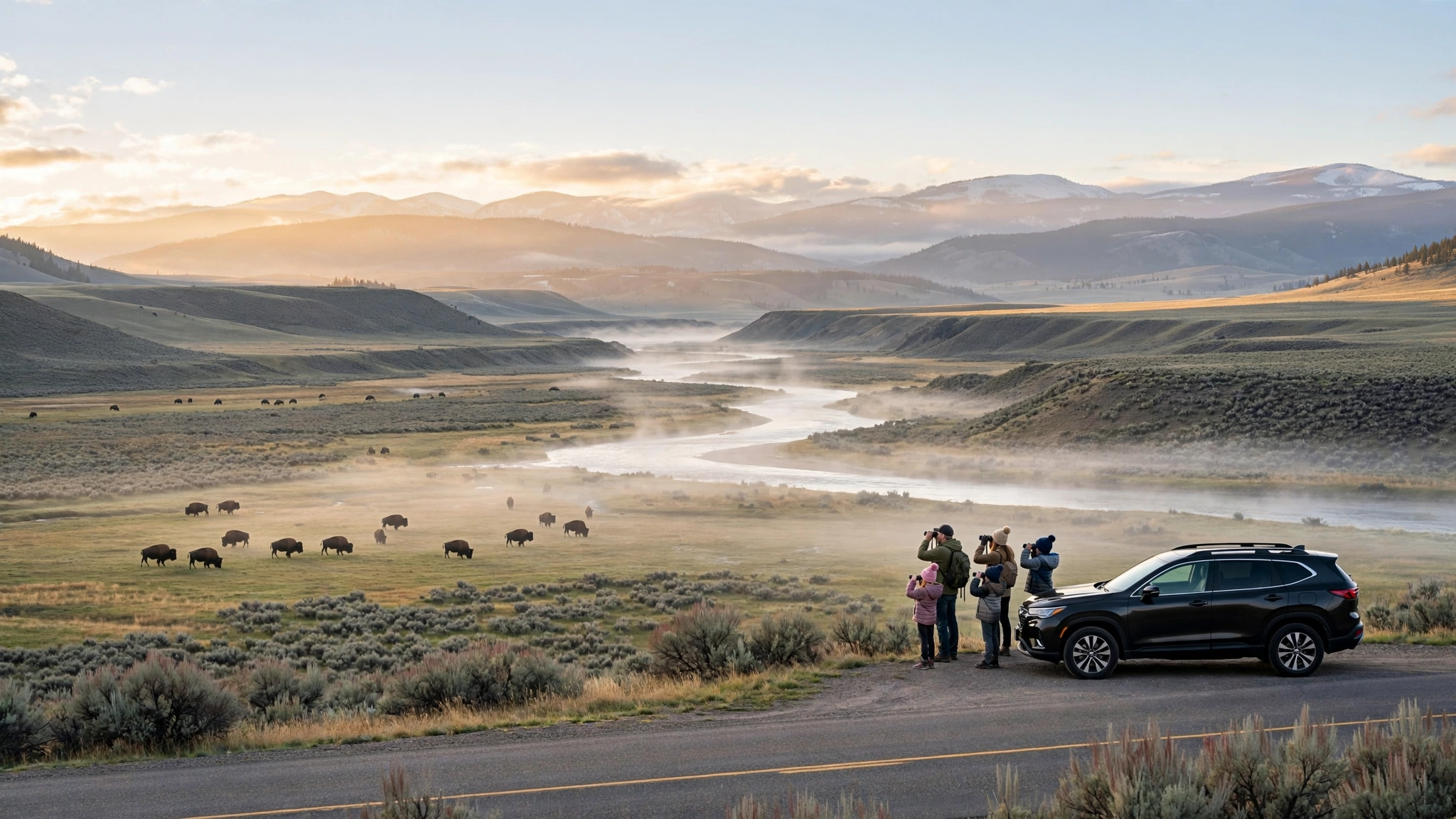
Yellowstone is large, and most of its famous stops sit far apart. Families who plan a day around "seeing everything" tend to spend it in the car. Families who plan around a few good stops tend to remember the bison crossing the road, the geyser that went off while they were eating sandwiches, and the kid who spotted the wolf first.
This guide covers the questions we hear most from families and private groups planning a trip from the Livingston and Bozeman gateway: how many days to allow, which season fits your group, how to keep drives and stops realistic, and what to check before you leave. It is general planning guidance. Road openings, services, and safety rules change, so use the official National Park Service Yellowstone planning pages for current information. Montana Wild Journeys is an independent trip planning service and is not affiliated with the National Park Service.
Start With the Shape of the Park
Yellowstone's main roads form a figure eight, with geyser basins, canyons, lakes, and wildlife valleys spread along it. The National Park Service notes that the park has five entrance stations and that it takes several hours to drive between them. Speed limits are low, traffic stops for wildlife, and parking at popular areas can take time.
That has one practical consequence: the entrance you choose shapes your whole trip. Travelers staying in Livingston or Paradise Valley are close to the North Entrance at Gardiner, roughly an hour's drive, and that side of the park leads toward Mammoth Hot Springs and the Lamar Valley. Visitors flying into Bozeman can reach the North or West entrances. Geyser basins such as Old Faithful and Grand Prismatic are on the park's western side, a long day trip from the northern gateway. Planning by region, instead of trying to cover the whole park each day, makes the logistics easier.
How Many Days Does a Family Need?
There is no single right answer, but these are useful starting points for families with a mix of ages.
- One day: Enough for a single focus, such as the northern range for wildlife or a geyser basin loop. Expect long hours in the vehicle. A guided private day can keep this manageable because someone else handles the driving and timing.
- Two to three days: A comfortable first visit. You can see one northern region and one geyser basin region on separate days, with a lighter day between them.
- Four to five days: Room for the canyon and lake areas, a slower pace for younger kids, and time to adjust for weather or a closed road.
- Six days or more: A good fit for multi-generational groups, or families who want to add outside activities such as a river float, a horseback ride, or a day in the Montana gateway towns.
A simple rule works well: give each park day one main area and one or two optional stops. If everyone is still energetic in the afternoon, add the optional stop. If not, you have not lost the day.
Choosing the Season That Fits Your Group
The National Park Service describes three visiting seasons: peak, off-peak, and winter. Its month-by-month summaries are a helpful baseline, and they all come with the reminder that weather can close roads or services at any time of year.
Summer: June through August
This is the busiest period, and nearly all visitor services are open. Waterfalls run strong in June. July is typically the warmest month, with frequent afternoon thunderstorms and a greater chance of wildfire haze. Mosquitoes can be noticeable in July. The NPS suggests entering before 7 a.m. or after noon and avoiding main attractions between 10 a.m. and 4 p.m. when you can. For families with kids, that often means early starts, a midday break, and a late afternoon stop.
Late spring: May
May is moderately busy. Snow can linger at higher elevations, and the NPS notes that roads are typically open by Memorial Day weekend, weather depending. Wildlife viewing is a highlight, and the NPS lists newborn animals among the sights, including bison calves and wolf pups emerging from dens. The trade-off is that some facilities are still opening and weather swings are common.
Early fall: September and October
September brings pleasant days and cooler nights, with the possibility of early snow at higher elevations. The NPS lists elk rut activity in places such as Mammoth Hot Springs. October is quieter, with more bears visible along roads, but colder weather, fewer open services, and the seasonal closing of some high-elevation roads. Families who prefer fewer crowds and can handle layers and flexibility often enjoy this window.
Winter: December through March
Winter changes how you travel. The NPS reports that most park roads are closed to regular vehicles from early November to late April, with the road from the North Entrance through Tower Junction to the Northeast Entrance generally open year-round. Commercially guided snowcoaches and snowmobiles reach the interior in winter, typically from mid-December to mid-March. Few facilities are open. Winter suits older children and adults who enjoy snow, quiet landscapes, and wolf watching in the Lamar Valley. Younger children may find long, cold days harder, so plan breaks and warm layers.
Keep Daily Drives and Stops Realistic
Families rarely regret planning too little. Most itinerary stress comes from trying to fit in a full list. These habits help.
- Plan for wildlife delays. Bison on the road and cars pulled over for a bear can turn a short drive into a long one. Treat those moments as part of the trip, and leave buffer time.
- Match stops to attention spans. Boardwalk walks at geyser basins work well for most ages. Longer hikes usually go better in the morning, before heat and thunderstorms.
- Put the meal plan in writing. Services are spread out, and lines at popular spots can be long in summer. Packing a cooler with lunch gives you flexibility to eat where the view is best.
- Allow one slower day. A trip of four days or more benefits from a lighter day for laundry, a hot-springs soak outside the park, a river float, or a visit to a museum.
- Plan for limited coverage. Mobile service can be spotty in parts of the park. Download maps and share a meeting point with your group before heading out.
Check Road Conditions and Closures Before Each Park Day
The NPS posts a live road status map, a recorded road information line, and projected opening and closing dates for each season. It also publishes anticipated construction delays each year, and some projects can add substantial waiting time at specific spots. Projected dates are subject to change with weather, and high-elevation roads such as Dunraven Pass are among the first to close in autumn.
The best habit is simple: check the official park roads page and the current conditions page the day before, and again the morning of your drive. Also check state road reports for the highways you will use to reach the park. If your plan depends on a single road, keep a backup option for the same day.
Plan for Safety, Especially With Children
The National Park Service's safety guidance is worth reading as a family before you arrive. Three points matter most for groups with kids:
- Keep your distance from wildlife. Stay at least 100 yards from bears, wolves, and cougars, and at least 25 yards from all other animals, including bison and elk. The NPS notes that the safest view of wildlife is often from inside a car, and binoculars or a telephoto lens give a better look than walking closer.
- Stay on boardwalks in thermal areas. The ground near thermal features can be a thin crust over very hot water. The NPS asks visitors to keep children close and not let them run on boardwalks. Swimming or soaking in water that is entirely of thermal origin is illegal.
- Leave pets out of thermal areas. Pets are not allowed in thermal areas or on boardwalks, so plan separate care if a pet is traveling with you.
Match the Plan to Your Group's Ages and Interests
A good itinerary starts with the people in the vehicle, not the list of attractions.
- Young children: Favor short boardwalk walks, wildlife viewing from the car, and predictable meal and nap times. A few well-chosen stops beat a packed schedule.
- Teens: Offer a say in the plan. Many teens enjoy a river float, a longer morning hike, or photography at dawn when the animals are active.
- Grandparents and multi-generational groups: Look for places with accessible viewing, comfortable seating, and the option to skip a hike without missing the day's highlight. Private vehicles with flexible timing help groups with different energy levels move at their own pace.
- Curious kids who love dinosaurs: Montana is known for its fossil history, and the Museum of the Rockies in Bozeman is a popular stop for fossil-loving families. It pairs well with a lighter day between park visits. Check hours before you go.
- Anglers, riders, and paddlers: Rivers and ranches around Livingston and Paradise Valley give these travelers a reason to spend part of the trip outside the park, which can also spread out the driving.
A Simple Planning Checklist
- Choose your dates and note which seasonal road and service conditions apply.
- Pick your base: Livingston and Paradise Valley for the northern side, or another gateway if your priorities lie elsewhere.
- Decide how many park days you need, then add one lighter day for groups of four days or more.
- Build each park day around one region and one or two optional stops.
- Book lodging and any guided activities early for peak summer travel.
- Check official road and condition pages before each park day.
- Review wildlife and thermal safety rules with everyone in the group, including children.
Families booking lodging and activities well in advance may also want to look at travel protection options as part of their planning.
Plan Your Yellowstone Trip With Local Help
Montana Wild Journeys plans custom Montana and Yellowstone trips for families and private groups from the Livingston and Bozeman gateway. If you have dates, group ages, and interests in mind, you can share them through our trip inquiry form, and we will follow up on next steps.
Seasonal details in this article come from National Park Service guidance and may change. Confirm current roads, services, safety rules, and conditions on the official Yellowstone National Park website before you travel.