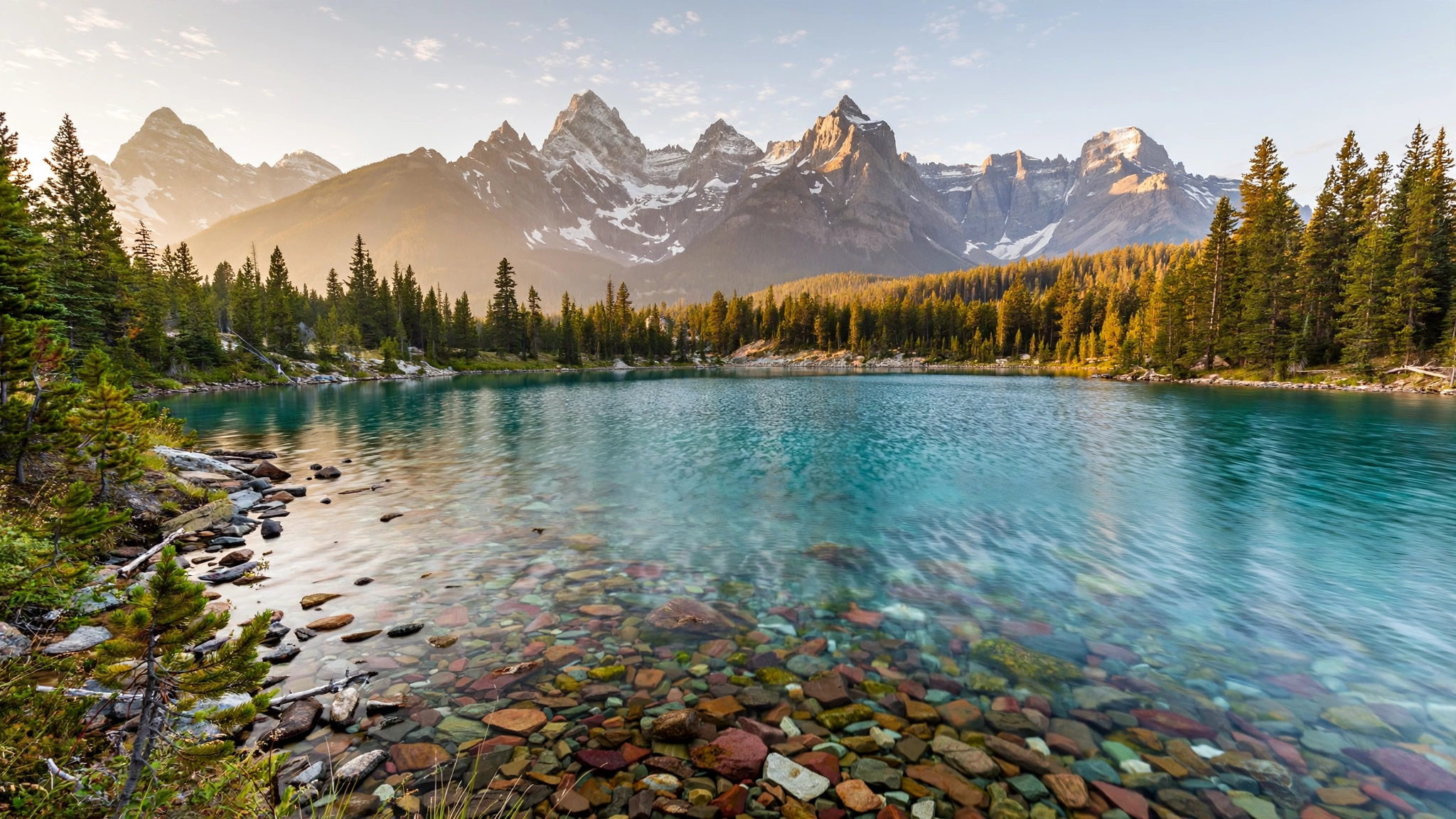
Yellowstone gets the headlines, but Glacier National Park in northwest Montana may be the park that stays with you longest. Think turquoise lakes with rainbow-colored stones on the bottom, alpine meadows, and a mountain road that climbs straight to the Continental Divide. It is also a park where timing matters more than almost anywhere else in the West.
This guide covers when to go, how long to stay, what to expect on the famous road, and how Glacier fits into a bigger Montana journey.
Start with the season, because snow decides what is open
Glacier sits high and gets a lot of snow. The park's best-known route, Going-to-the-Sun Road, crosses the mountains at Logan Pass, and the high section usually cannot open until crews finish clearing snow. There is no set opening date, though the road has typically been fully open by early July. Check the park's official road information before you lock in plans.
- Late June to mid July: Lakes and valleys are green and waterfalls are running full. Higher trails may still hold snow, and parts of the road may be limited.
- Mid July through August: The most dependable window. Wildflowers bloom around Logan Pass, nearly every road and trail is open, and days are long. It is also the busiest stretch of the year.
- September: Crowds thin, mornings turn crisp, and the light is soft. Some services begin to close as the month goes on, so check what is open for your dates.
- October to May: Quiet and beautiful around Lake McDonald and the west side, but much of the park is closed to vehicles and facilities are limited.
Going-to-the-Sun Road: what to know before you drive it
The road runs roughly 50 miles between the west and east sides of the park. Plan on it taking far longer than the mileage suggests. You will want to stop at pullouts, wait for traffic, and simply look.
- Check entry rules early. Glacier has used timed vehicle reservations for some areas and seasons in recent years, and the rules can change. Look at the park's official page before you travel so you are not surprised at the gate.
- Start early. Morning means easier parking at Logan Pass, calmer light on the lakes, and a better chance of seeing wildlife.
- Know the vehicle limits. Longer and wider vehicles face restrictions on the narrowest sections. If you are renting an RV or traveling with a large group vehicle, confirm the rules first.
- Consider a guided option. Some travelers prefer to let someone else handle the driving so everyone can look out the window. Park shuttles and guided tours exist, and some escorted group itineraries include time in the park.
How many days does Glacier need?
The answer depends on how you like to travel.
- One full day: You can drive the road, stop at Lake McDonald and Logan Pass, and take one short walk. It is a good sampler, but it will feel rushed.
- Two to three days: The sweet spot for most visitors. Spend one day on the west side around Lake McDonald and Apgar, one day crossing the road to Logan Pass, and one day in a quieter corner such as Many Glacier or Two Medicine on the east side.
- Four days or more: Room for longer hikes, a boat tour, a slow morning with coffee by the water, and a buffer for weather or road delays.
The west and east sides feel like different parks. Many travelers stay on one side for a few nights, then move to the other so they spend more time seeing the park and less time in the car.
Easy ways to enjoy the park without a big hike
You do not need to be a backpacker to love Glacier. Families, multigenerational groups, and first-time visitors can fill a trip with gentler highlights:
- Walk the shoreline at Lake McDonald and look for the colorful stones in the clear shallows.
- Explore the Logan Pass visitor center area for alpine views and seasonal wildflowers. Check trail conditions and accessibility before setting out.
- Ride a historic red bus or take a boat tour, where available, for a relaxed view of the valleys.
- Spend an evening at a lakeside lodge or viewpoint and let the sunset do the work.
Bears, weather, and the basics of staying safe
Glacier is grizzly and black bear country. Keep a safe distance from all wildlife, carry bear spray on trails and know how to use it, hike in groups, make noise on the trail, and store food as the park directs. Weather can swing from sunshine to cold rain within a few hours at higher elevations, so pack layers, a rain jacket, and sturdy shoes even in July. Cell service is limited in much of the park, so download maps before you go.
Pairing Glacier with Yellowstone
Many travelers want to see both parks in one trip, and it can work well with some planning. The two are several hundred miles apart, so you will want a full travel day between them, often with a stop in a Montana town such as Missoula, Helena or Bozeman along the way. Ten days is a comfortable length for a trip that includes both. It gives each park room to breathe and keeps long drives from taking over the schedule.
If you are still working on the Yellowstone side, our guide to planning a family trip to Yellowstone covers trip length, seasons, and realistic daily drives.
Independent trip, custom plan, or escorted tour?
There is more than one good way to see Glacier, and the right one depends on how much you want to decide yourself.
- Self-guided: You set the pace and choose where to stay. This works well if you enjoy research and are comfortable with driving mountain roads.
- Custom Montana planning: Montana Wild Journeys can help you shape a Montana or Yellowstone trip around your dates, group, and interests.
- Escorted group tours: Operators such as Globus and Collette run their own itineraries through the national parks of the American West. Each tour has its own route, inclusions, and availability, so compare the details of any itinerary you are considering.
A simple checklist before you go
- Confirm which parts of the park are open for your dates.
- Check the park's official page for current entry and vehicle rules.
- Book lodging early, since rooms near the park fill quickly in summer.
- Pack layers, rain gear, sun protection, bear spray if you plan to hike, and a paper or downloaded map.
- Leave buffer time in your schedule for road delays and weather.
Ready to start planning?
If you are dreaming of Glacier, Yellowstone, or both, tell us when you hope to travel, who is coming, and what you most want to see. Start your trip inquiry and we will begin the conversation from there.